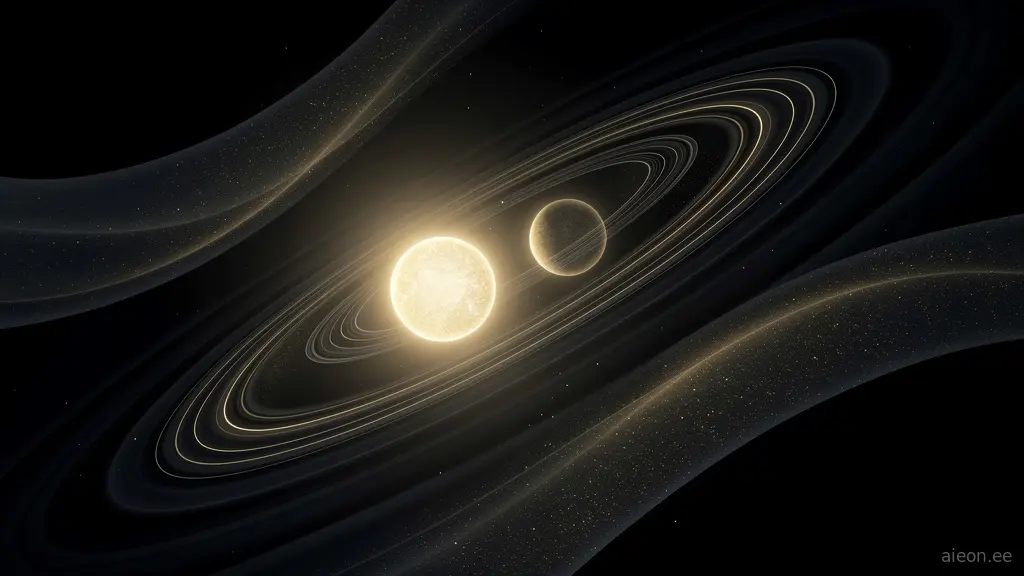
Betelgeuse’s Long-Sought Companion Imaged
Astronomers using ESO’s Very Large Telescope have captured the clearest direct image yet of a stellar companion orbiting Betelgeuse, the red supergiant in Orion. The detection, published 27 August 2026, ends a roughly century-long search and shows the companion is more massive than expected—about two to three solar masses. It stands out because the star’s brightness variations and evolutionary path have long puzzled observers; a companion offers a concrete dynamical explanation.
Betelgeuse has been monitored for millennia and intensively studied for decades. Earlier 2024 predictions pinpointed the companion’s maximum apparent separation in December 2024, enabling the SPHERE instrument observations. Previous indirect clues and a possible Gemini detection existed, but the new VLT data provide the strongest evidence by isolating light from the companion itself after subtracting Betelgeuse.
Confirmation still requires a follow-up observation roughly one year later on the opposite side of the orbit. Uncertainties remain about the companion’s precise influence on Betelgeuse’s mass loss, pulsations, and eventual supernova. The higher-than-predicted mass also revises models of the system’s formation and future evolution.
Sources: ScienceDaily/ESO, Astronomy & Astrophysics.
AI Finds Low-Power Route to 3D-Print NASA Rocket Alloy
Washington State University researchers used an AI-driven adaptive experimental design to identify viable process parameters for 3D-printing GRCop-42, a copper-chromium-niobium alloy developed by NASA for high-heat rocket components. After scanning more than 100 million possible settings and running only 40 physical experiments, the system found six successful configurations, including one at a record-low 500 watts. This could allow the alloy to be printed on far more common commercial machines instead of specialized high-power systems.
GRCop-42 combines high thermal conductivity with strength at extreme temperatures, making it ideal for liquid rocket engine combustion chambers, yet it has been expensive and difficult to print. Earlier manual trials failed at lower laser powers typical of most commercial printers. The AI started from 37 known failed configurations, balanced exploitation of promising regions with exploration of uncertain ones, and iteratively refined its model with each binary success/failure result.
Key uncertainties include whether the low-power prints fully match the mechanical and thermal performance of high-power versions under flight conditions, and how readily the method transfers to other alloys or printers. Material cost and post-processing still matter, and real-world deployment carries risk because each failed print wastes expensive feedstock. Broader applicability to other high-stakes experimental search spaces remains to be proven at scale.
Sources: ScienceDaily/Washington State University, Proceedings of the AAAI Conference on Artificial Intelligence.
Possible First Evidence of Vacuum Birefringence
Observations of the magnetar 1E 1547.0-5408 may have detected vacuum birefringence, a quantum effect predicted by Heisenberg nearly 90 years ago in which a strong magnetic field causes empty space to alter the polarization of light. Data from CSIRO’s Parkes radio telescope combined with NASA’s IXPE and NICER X-ray instruments show high polarization aligned with the magnetar’s magnetic field, consistent with virtual particles in the vacuum influencing photon travel. The result, reported 26 August 2026 in Nature, would constitute the first solid evidence of the phenomenon.
Vacuum birefringence requires magnetic fields orders of magnitude stronger than any laboratory can produce. Magnetars supply those fields naturally. The chosen object’s nearly aligned magnetic and rotational axes, viewed nearly pole-on, provided an especially clean geometry for tracking polarization changes as the star rotates.
Alternative astrophysical processes could still mimic the signal, so additional observations and refined simulations are required for definitive confirmation. If verified, the finding would open a new observational window on quantum electrodynamics under extreme conditions unreachable on Earth and test how fundamental physics behaves in the strongest known magnetic environments.
Sources: ScienceDaily/Universe Today, Nature.